Waste biomass is a misnomer. What we call “waste'“ is biomass in excess of natural levels—biomass that would have burned, but for fire suppression. In fire-adapted landscapes like ours, suppression results in accumulation of flammable vegetation that would otherwise have been consumed in the natural cycle of fire, or through ignitions by people mimicking nature to enhance specific resources.
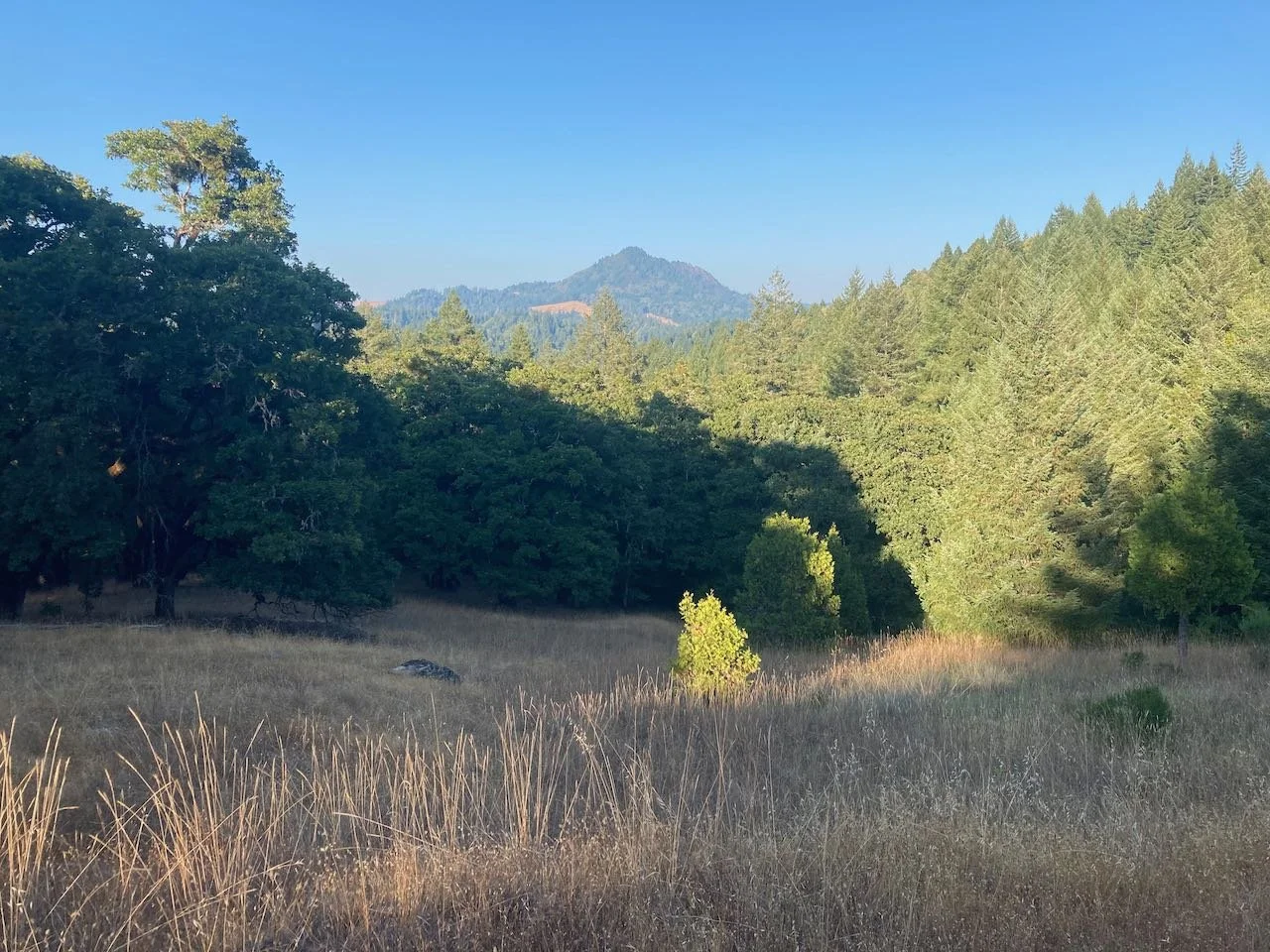
Land as we’ve become used to seeing it—starved for fire
In the cycle of fire, there is a natural equilibrium between accumulation and combustion. We don’t know what that equilibrium is, because we mask it with fire suppression. Our view of biomass is blinkered, like perceiving living trees as timber for extraction. Thinking of all accumulation as “bad” subsitutes anthropocentric values for the natural equilibrium, and while we need suppression as a tool for reestablishing it, our attention needs to be on mimicking how nature does this in order to succeed.
Natural fire tends to vary in intensity from place to place and from one fire to the next, even in the same landscape. We call this effect a “mosaic.” The result is a shifting tapestry of biomass levels. Overall, some biomass always accumulates between fires in the natural cycle. In that sense, there is always an “excess,” but it’s a range, not a fixed amount, for any given part of a landscape over time.
In other words, it may not be useful to think in terms of a single end point, or baseline, for fuel reduction and fire.
When we set out to restore forest health with thinning and burning, at first there is a lot of excess material. The initial choices about what to remove manually are usually obvious: ladder fuels, fallen branches and trees, low limbs, small dead trunks, etc. This is the excess from which we make biochar until we can safely let fire take over the job. We establish burn units, and take them on one at a time. Once enough material has been sufficiently removed, fire is safely reintroduced, and work on that unit becomes a matter of widely spaced ignitions. All the work that we did to reduce the fuel is now done by fire.
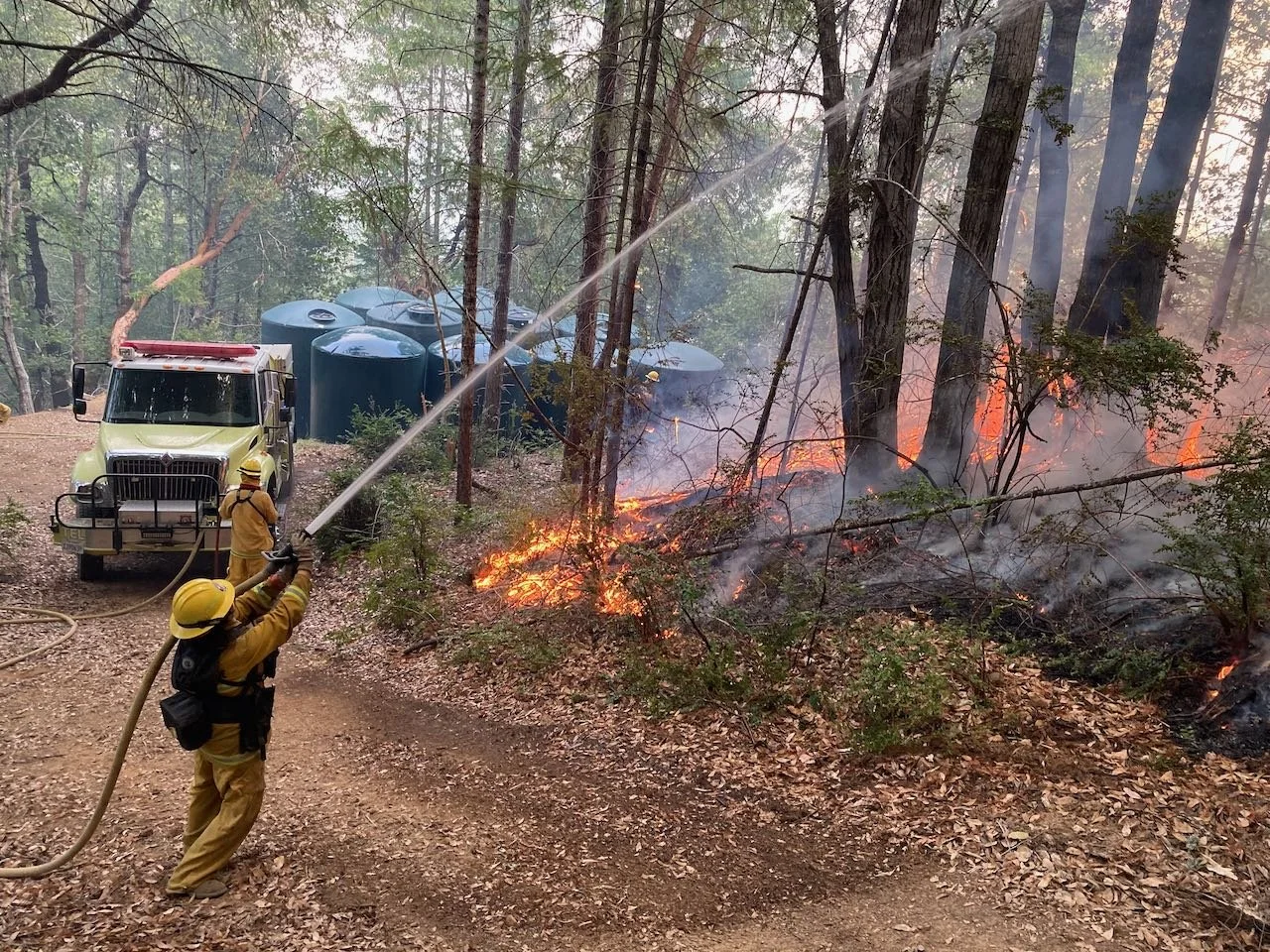
Humboldt County Prescribed Burn Association adding another unit to the finished puzzle; Briceland, October 2024
In terms of restoring forest health, how we remove the excess material is less important than whether we do it. Making biochar from the excess and leaving it on site has unique advantages over chipping and incineration for the forest in terms of soil productivity and water retention, but ultimately what the forest depends on is the fire cycle with which it evolved. Intentional burning is the last step, followed by endlessly repeated ignitions, but how we get there is relatively insignificant, compared to wildfire.
Gordon West coined an alternative term for this excess: “liability biomass.” Biomass is only a liability when it threatens human and natural systems. Even natural levels can be a liability in proximity to us and our infrastructure. Each forestry unit has a unique set of parameters that determine how fire will behave within it. We are learning how to listen to these signals from the landscape, how to use fire to our advantage, so that biomass is no longer a liability.
Once we catch up with the excess in a given unit, it will be a lot less work to keep up with the fuel load, using fire. But where we end up will be a shifting spectrum of fuel levels, not a baseline. With each burn unit that we define and restore with fire, we add a piece to the puzzle, but the pieces will not be static. A new, dynamic mosaic will emerge, one that our culture has never seen.