Black Ripple and KMUD produced the conference “Making Money With Your Forest” at Redwood Playhouse on March 14, to great success! With over 100 in attendance, the event exceeded its goals for reaching local forest land owners and raising needed funds for Southern Humboldt Fire Safe Council and KMUD.
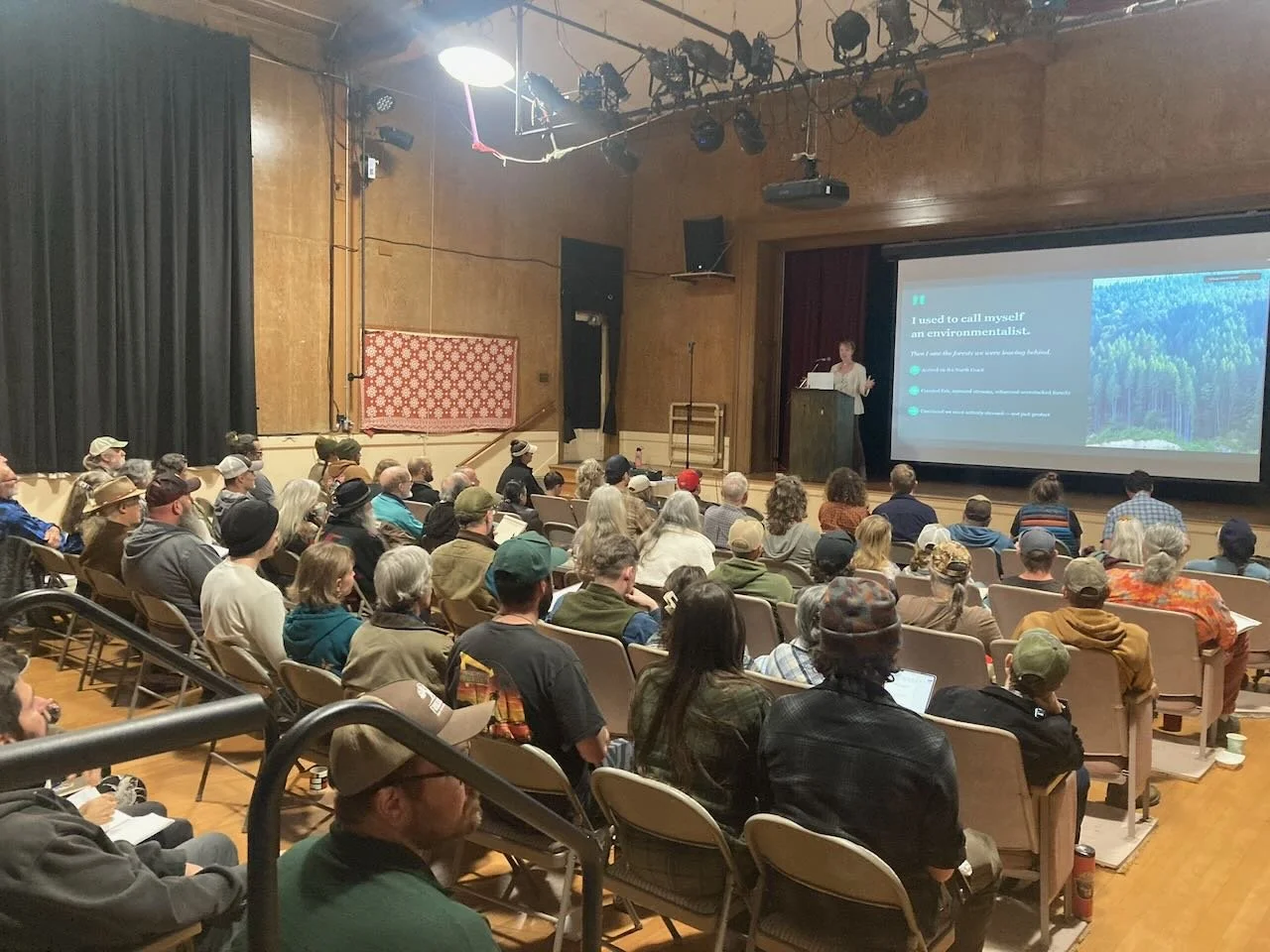
The conference was directed by the team of myself and my partner Karyn Wagner, whose experience and dedication was invaluable, along with a host of volunteers for food and setup/breakdown. Joe Snipes solicited and coordinated donations of food, and Chelsea Sproul directed volunteers on the day of the event, with Harry Vaughn as facility liaison.
Presentations led off with Christy Prescott of ForestWRX, mapping out the range of current and future financial strategies that promote forest health.
Jim Robbins of CAL FIRE followed with a detailed description of the CFIP (California Forest Improvement Program), which he directs. CFIP can be used to fund an RPF (Registered Professional Forester) to write a Forest Management Plan, as well as to treat the excess fuel.
Katelyn Suderman of NRCS (Natural Resources Conservation Service) explained the full range of funded activities under EQIP (Environmental Quality Improvement Program), which includes prescribed burning. Placing fire on the ground is the final step in fuel reduction, setting the stage not only for fire resiliency but also many less obvious benefits such as greater biodiversity and improved habitat.
Wrapping up the morning session, Larry Wilson RPF gave us the background and methodology for using carbon credits to derive income from the carbon in the trees that have been conserved by this restoration work. Larry had advised Karyn and me about the strategy of using CFIP and EQIP followed by registering for carbon credits to come out well ahead, which led directly to our decision to offer this conference.
Next was lunch, presented by our good friend and foodie Charlotte Knox who came up from Sebastopol to manage on-site food service.
I led off the afternoon session explaining the importance of converting some of the unmerchantable brush into valuable biochar on site instead of chipping or incinerating it. Dalton Shepherd of Laytonville talked about a new method for getting carbon credits from avoided emissions called REM (Reduced Emissions from Megafires). Eric Lassotovitch described how poles are made from smaller Douglas-firs and used make pole structures. At the end, we joined for drinks and snacks in a “Helping Hour” to continue discussions and schmooze.
We’ve heard nothing but positive feedback about the conference, and we’re looking for ways to continue supporting this work in the local community. KMUD will make a recording of the conference available for a fee (free to paid participants).