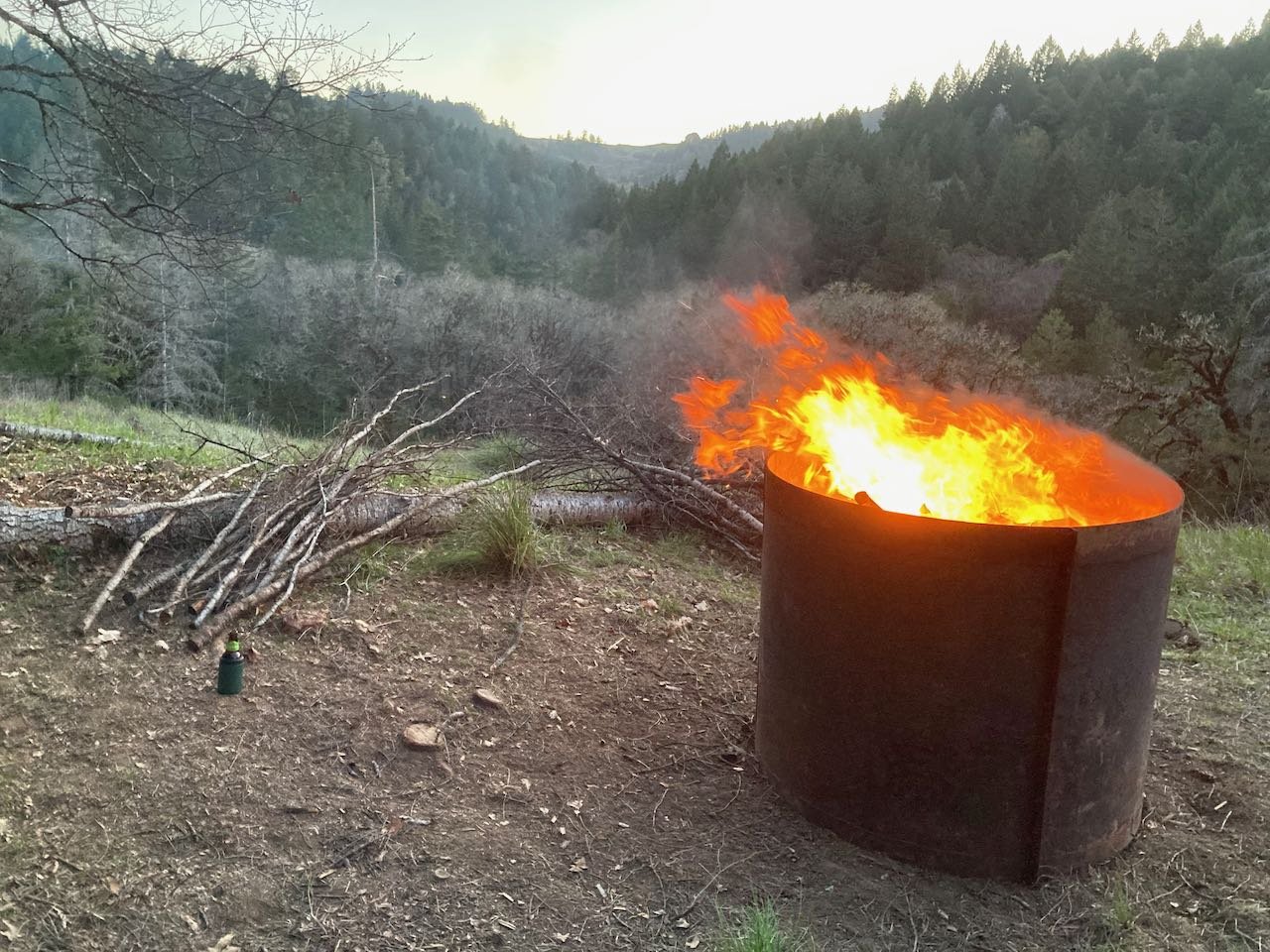
In April 2021, I started a burn on a beautiful, clear day that became windy. Generally you don’t want to burn in the wind, for the obvious reason that it pushes up against your safety margin for containment. Even though clean-burning flame cap kilns like mine tend not to throw sparks and I had a good buffer of mineral soil around it, I ended the burn early and planned to finish burning later. With an air quench kiln, you can install the lid, come back later, and resume where you left off—which lets you pause a burn overnight and accommodate things like lunch breaks and unanticipated distractions.
Well, a few days went by and other priorities came up, so I decided to just dismantle the kiln. Because it was not much char and it was a quarter mile from the cabin, I ended up just leaving it.
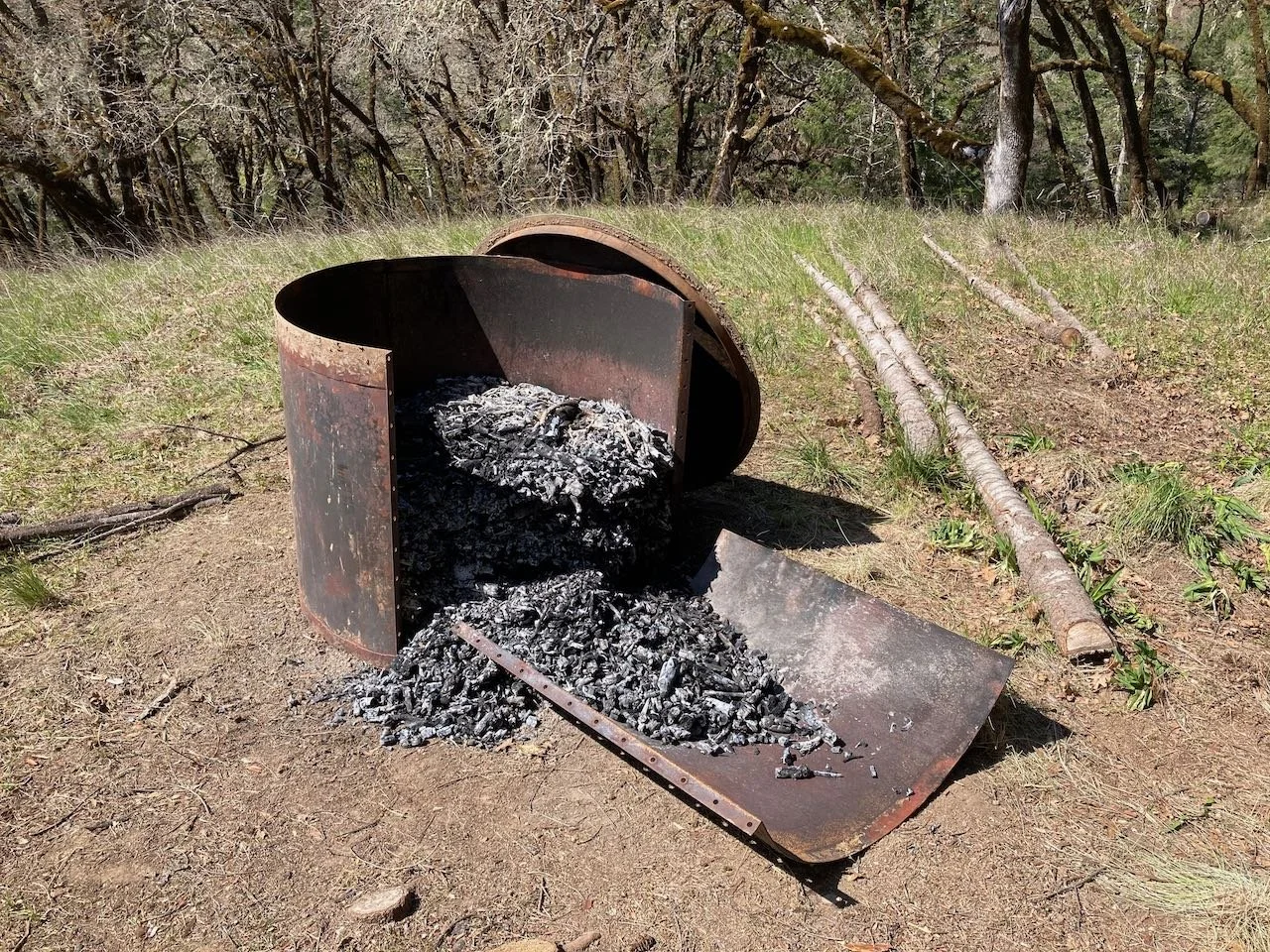
Taken a week after the first photo. Notice how much char there is at this point. That’s going to change!
A month went by, and I noticed that some of the biochar had been taken. I assumed that one of my neighbors used it in their garden, which they were welcome to do. By the time I finally found out that no, they didn’t, the dimple on top of the pile had grown larger. Somebody or something was still at it.
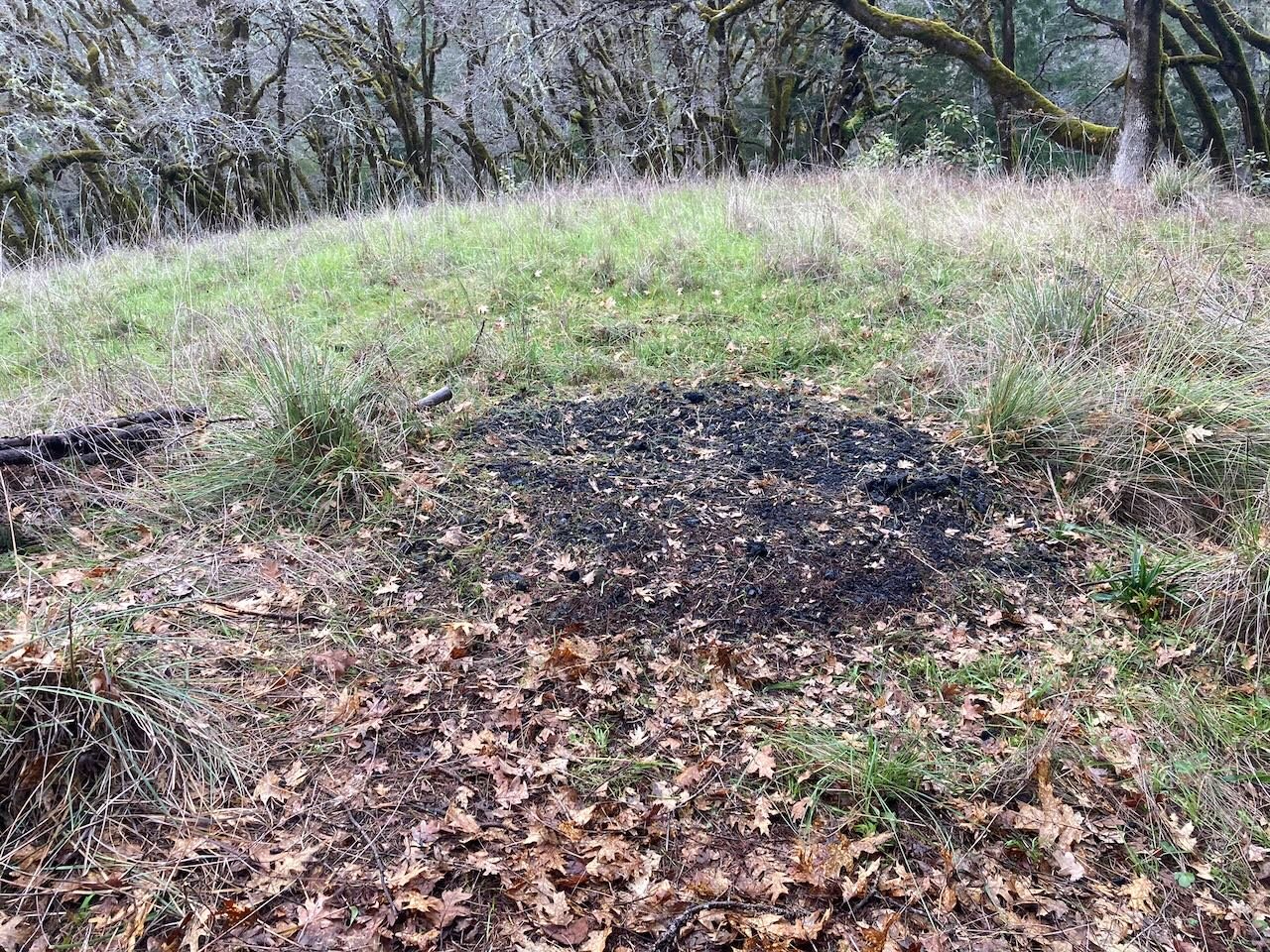
February 2026
After five years, and only a thin layer remains, having gradually disappeared from an expanding dimple on top. But who would pilfer down to within a few inches of the ground, and then stop? Occasional sampling wasn’t like humans. I never set up a wildlife camera to find out, because I already had a pretty good idea who it was.
Of the many animal species known for geophagy—the voluntary consumption of char to aid digestion and self-medicate against parasites, worms and ingested toxins—the most likely culprit was deer. Animals have instinctive knowledge about eating charcoal to stay healthy. Other piles I left on site were being pilfered too, but not as much. What was different about this pile?
Temperature. This batch burned hotter, because of the wind, which stripped more of its impurities—anything that isn’t carbon or ash—and increased its graphene content, making it more activated, which is what makes charcoal medicinal. That would explain the attraction from animals like deer, who instinctively self-medicate.
Let’s back up a bit and explain how this works.
Pyrolysis takes apart biomass and either burns or vents anything that isn’t pure carbon or minerals. Minerals make up the ash that results from allowing the fire to burn past the pyrolysis stage. To get charcoal, we simply put out the fire when the flames disappear, leaving the carbon behind, with the minerals inside. Some of the biomass might not fully convert to pure carbon and minerals; that’s OK. The leftover compounds are food for soil microbes. In fact we want this to happen if we’re making charcoal for grilling, because that’s where flavors come from. But if we’re making biochar, we want most of those other compounds to go away. Hydrogen is one of the molecules in the leftovers, which is why testing for H:C ratio determines biochar quality.
Burning off the volatile compounds that burn as flame can be enhanced in two ways: higher temperature and longer residence time. At higher temperature, conversion is more complete. Residence time means how long a temperature is sustained; more time leads to more complete conversion. In an open burn, such as a simple pile or a flame cap kiln, there’s not much we can do to increase residence time. For any given amount of biomass, burning off the volatiles takes a certain amount of time. If we let the biomass cook any longer, air will reach the char and start consuming it. But there are ways to increase the temperature. One way is to use a kiln to insulate the fire (especially a double-walled kiln). Higher temps also result from providing forced air, although carbon will be lost due to oxygen being blasted onto the biomass. When you burn hotter, you make less biochar, but you burn off more of the volatiles. (Closed systems, like retorts, get around this.)
There’s more to pyrolytic conversion than just expelling what isn’t carbon and minerals. In biomass pyrolysis, the remaining carbon is restructured into molecular rings. Biomass is made of linear molecules, called polymers. Pyrolysis breaks the bonds that form polymers, freeing the carbon atoms to re-associate into rings. These carbon rings, in turn, attach to each other in graphene-like sheets that are one molecule thick and electrically conductive. Graphene is the name for perfect carbon sheets. Biochar consists of a jumble of imperfect carbon sheets; they only begin to align during pyrolysis. How well they organize is another aspect of biochar’s quality and durability.
So to summarize, pyrolysis does two things: it strips off the volatile compounds and reorganizes the carbon into rings. This occurs in all biomass fires. All biomass fires will make biochar if you extinguish the fire when pyrolysis ends, i.e., when the flames go out. (Otherwise the charcoal burns to ash.) Differences in biochar quality are due to the temperature during pyrolysis.
Biochar contributes as much to digestive and gut health as it does to soil health and productivity. The same molecular structure that supercharges the soil microbiome by holding nutrients and providing habitat for microbes captures gut toxins and intestinal parasites. The vast surface area of biochar traps heavy metals, mold toxins, and other unwanted compounds, safely carrying them out of the body. Biochar promotes the growth of helpful gut bacteria while lowering populations of harmful pathogens like Salmonella. It helps stabilize digestion, easing diarrhea and lowering gas production in ruminants, and helps animals process feed more efficiently, which can lead to better growth rates.
Activated charcoal is a more completely converted material with more receptivity, but biochar is close enough to provide similar services—especially if it was made in a hotter process than usual. We use activated charcoal medicinally because we can. Wild animals such as deer don’t have access to activated charcoal, but they’ve learned to identify and select high-quality biochar, made with higher heat.
A few notes on pyroligneous geophagy:
It’s illegal to feed biochar directly to livestock in the U.S., but not where big pharma’s influence is absent. “We have been adding biochar to the feed of poultry and animals for many years. Biochar increased growth from 17% to 40%,” reports Paul Olivier from Vietnam.
For ruminants, like deer and cows, one study found that between 70 and 90% of biochar they consume exits the other side intact—in terms of both its physical structure and its chemical makeup. Animals of all shapes and sizes forage biochar in their environment as a nutritional supplement.
“The first microbiome that char assists is often the gut microbiome” says Ethan Young of Convergence Ecosystem Services. “Biochar then cycles through multiple copraphagic species’ guts and respective microbiomes until it comes to reside within the soil, and contributes to the soil's capacity to do its own composting. Compost is a biomechanical analog of an animal gut. As char cycles metabolically through various microbiomes, it physically wears down biochar into smaller and smaller particles which increases [surface-to volume ratio], inoculated diversity and ultimately effectiveness per unit mass of char. The goal isn't to get as much char as possible into the ground as fast as possible, but to add char to microbiomes in [a] manner through which it enhances and extends the function of the microbiomes it encounters on a continual basis.”